

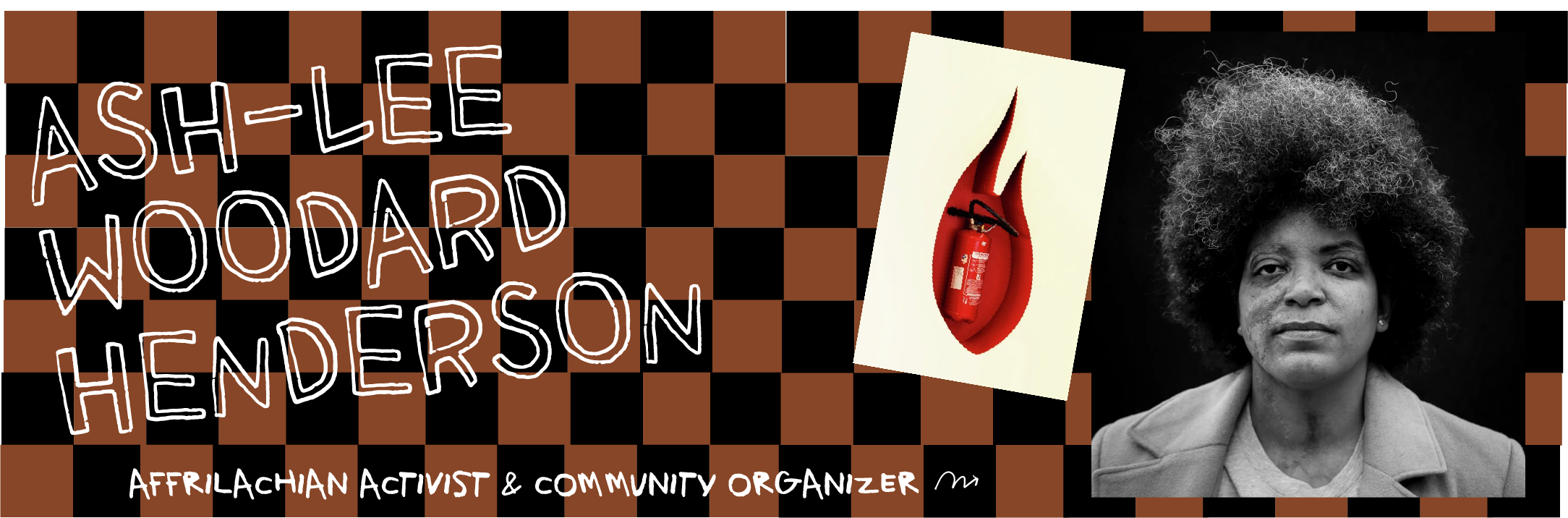
Ash-Lee Woodard Henderson (she/her) is an Affrilachian woman and long-time activist born and raised in Southeast Tennessee. You might know Ash-Lee as the first Black woman to serve as Co-Executive Director of the Highlander Research & Education Center - aka the movement school Rosa Parks attended before refusing to give up her bus seat in 1955 - or for her leadership in Movement for Black Lives, including co-writing the Vision for Black Lives and the BREATHE Act. With extensive experience organizing across movements, Ash-Lee’s thrown down with Concerned Citizens for Justice, Appalachia Rising, Southern Movement Assembly, National Bailout Collective, The Frontline, Project South: Institute for the Elimination of Poverty and Genocide, Communication Workers of America, Texas State Employees Union, and United Campus Workers — to name a few. You might also recognize Ash-Lee as the host of Working Families Party, Seed The Vote, Showing Up for Racial Justice, and Movement for Black Lives Mass Calls during this last election season. Here’s how Ash-Lee navigates being in the movement for the long haul.
This interview has been edited for length and clarity — December 2024.
On being born in the upswell of movement:
I was born in Chattanooga, Tennessee, and it matters that I was born in Chattanooga because of the timing. I was raised bouncing back and forth between Chattanooga and a little unincorporated town in Hamilton County called Summit, Tennessee. That's where my twang and the accent comes from. My grandparents raised my mom in a cinder block shack as the youngest of five children, and when I was little, I grew up in that same cinder block shack. This was before the gentrification and sprawl of the city started to go into the more rural parts of the county, and so I bounced between a very rural experience where my grandparents had huge gardens that city folks would call farms because they're so big. I grew up picking blackberries and driving on dirt roads in the grass, and then I'd go to the city and my friends would come up to the county and be like, "Wait, I don't understand why y'all driving in the grass like that." I was rural and urban.
When I was born in Chattanooga, it was 1985, and it was on the heels of a huge fight against police brutality in my city. The Chattanooga Police Department had murdered a Black man named Wadie Suttles, a veteran who got in trouble for sleeping in his car at a paid parking meter. His daughter Maxine Cousin, her best friend Annie Thomas, and Annie's two pre-teen daughters started an organization called Concerned Citizens for Justice to fight for justice for Wadie Suttles. The case blew up. It made it all the way to Amnesty International. There was a UN investigation. There were all these things that were called into question around the murder of Wadie Suttles.
My mom, who passed away in October, had joined the Black Panther Party in Knoxville in the 70s, and so by the time I was born and Wadie Suttles was murdered, my mom was doing the work. She was very involved in the fight for justice for Wadie. My father was a radio disc jockey and was working at a radio station that my mom's brother and my godfather owned — a Black radio station, WNOO, that still exists today — and he did Black news. He would talk to Black people about what was happening in the Black community, and it just so happened that a secret informant told my dad the police officers’ names that murdered Wadie Suttles as it had not been released. My dad - who was certainly more conservative than my mother but down for Black people - went on air live and spilled the names of the cops that killed Wadie Suttles for the first time. My dad left the booth and got fired. My mom lost her job immediately thereafter, and then they found out they were pregnant with me. I was born in the upswell.
On the blessing and burden of being born into activism:
My parents went on to do all sorts of radical activism and cultural organizing. My dad started a repertory theater company. For years, my mom was the most well-educated welfare mom in my city. Her activism made it hard for her to get jobs - she was literally what they called “blacklisted.” I grew up being the kid that was dragged to the actions in the stroller or wheelbarrow or whatever it was. I was the kid that was sitting in Operation PUSH Rainbow Coalition meetings till three in the morning, and I was going to the Unity Group meetings in the basements of Black churches. I was listening and absorbing all this brilliance from all of these incredible feminists, womanists, Black liberationists, socialists, communists, and anarchists. Lorenzo Ervin, the amazing Black anarchist, is from my city. Mukasa Ricks, the man who coined the term “Black power” that Stokely Carmichael went on to popularize, is from my city. I didn't know these people were famous until I was in college - I just thought they were my wacky aunts and uncles. A lot of people that come into activism don't get that. I was blessed with this eldership that I was absorbing from all of the time.
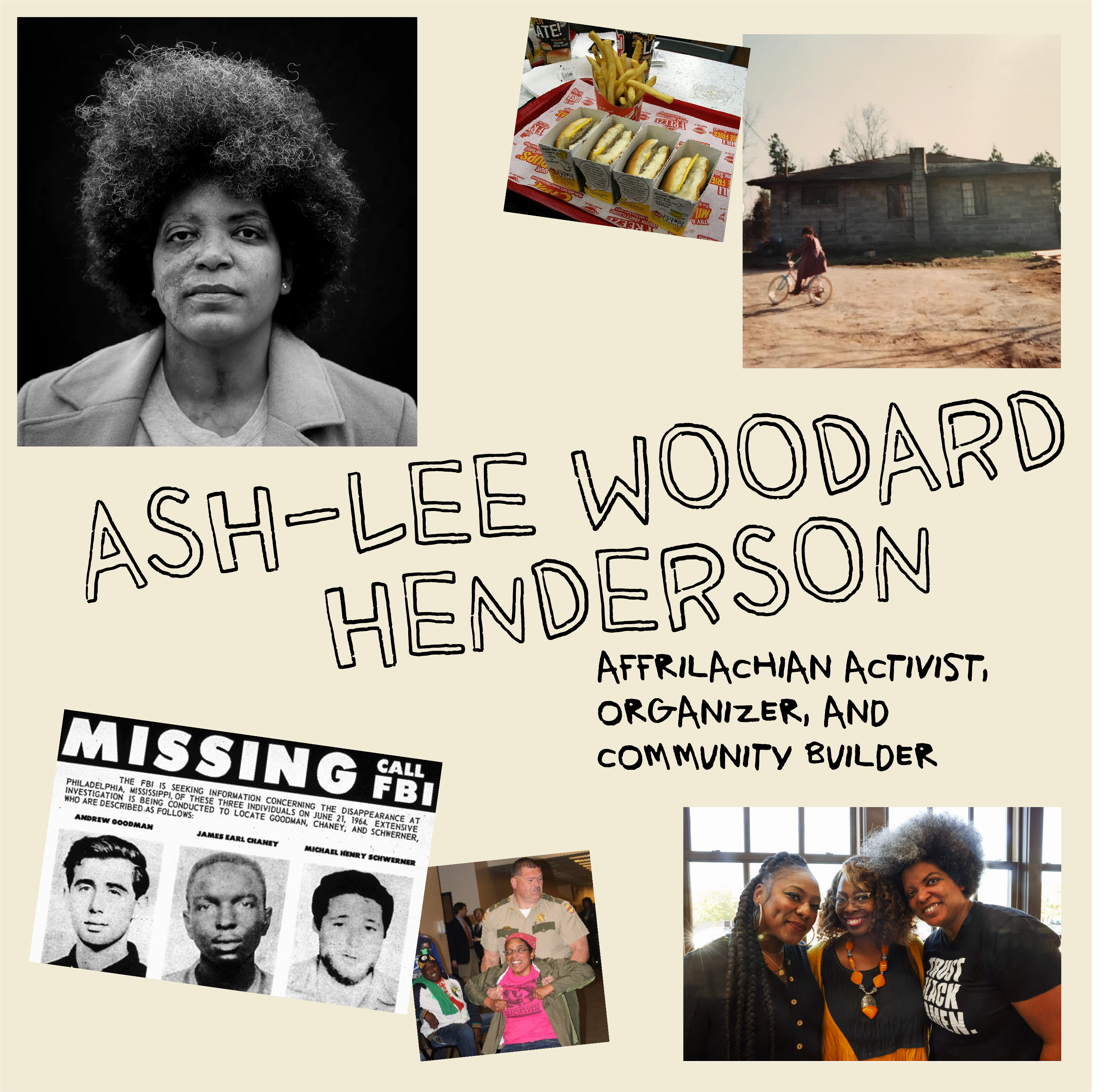
And, in some ways, it was honestly quite the burden to be a part of a family that would eat Krystal burgers for Thanksgiving if it meant everybody ate or who had to deal with houselessness because of our class background and our activism. I've slept in cars and I grew up working class. I don't know that I always appreciated the gift of my parents' legacies and my grandparents before them. I was just born into a family that believed that to whom anything was given, much was required — that if we had it, everybody had it and our job was to serve. We were born with a purpose to serve our people.
On Freedom Rides and embracing your calling:
My mom's dad had been the chair for our voting precinct for my whole life. I definitely wasn't taught that voting was the only way to justice and liberation, but I was taught by any means necessary means by all the means, so take your ass to the polls. I would get dragged to go vote with my mom and my grandmother, see my grandfather, bring him lunch, and fill out the bubbles in my mom and my grandmother's ballots. It was a ritual.
So my senior year in high school, it’s 2003 — we're gearing up for 2004, which is a major electoral cycle for the feds, and I’m ready. Give me my voter registration card. I'm at this predominantly White high school and I notice that there's other White folks that are coming in as volunteer speakers. They're talking about voting, but they're not talking to me. They're going and talking to the White boys with the crew cuts, the Abercrombie & Fitch khakis, and the Ralph Lauren Polos. And, I'm like, “Yo, but I'm your prime target. I want to do this. I'm looking for you to help me do this.” They wouldn't talk to me, and it just made me mad.
I had a cell phone at the time and I called my mom at work and said, "Mom, I'm pissed off." And she was like, “Whoa, what's going on?" And I told her about these folks coming and not talking to me, and she said, "You should call this man named Johnny Holloway” - who at the time was the president or the chair of the Operation PUSH Coalition in our city. Operation Push and Rainbow Coalition is nationally the thing that Jesse Jackson is known for other than working with Dr. King. The state of Tennessee was very involved in Jesse's campaign when he ran for president, so we still had that infrastructure
I called Johnny and I said, "Hey, Mr. Holloway. Mom told me to call you about what's going on in my school." I told him what happened, and he said, "It's God that you called me." And I was like, "Bro, you got to break that down for me because God didn't tell me I was going to call you today." He said, “ I just got off the phone with this cat, Ben Chaney. Do you know him?" And I said, "No, sir." And he said, "Well, you know about Chaney, Goodman and Schwerner?" And I said, "No, sir." And he said, "You know about Mississippi Burning, right?" And I was like, "I never saw it." And so, he took me back to 1964 — he talked to me about the Student Nonviolent Coordinating Committee and the Congress of Racial Equality. He said these folks had the audacity to be in right relationship with folks in places like Mississippi and to participate in a bus tour called the Freedom Rides, which was an organizing strategy to go down to Mississippi and register Black people to vote when it was still illegal and when segregation was still the law of the land. Three of them - two White, Jewish people and one Black Mississippian - were murdered for their effort: James Earl Chaney, Michael Schwerner, and Andrew Goodman.
He said that Ben was the little brother of James Earl Chaney, that he was maybe 12 when James was murdered, and there's a famous picture of his mother and Ben at the funeral service where Dave Dennis gave the eulogy. Johnny catches me up on my own history. Ben was going to reenact the Freedom Rides with young people from all over the country in 2004. Johnny told me that if I helped him organize the Chattanooga stop on the Freedom Rides, that he would send me on the trip for free. I'm like, “Wait, I get to get out of this city and I don't have to pay for it. Let's go.” I helped them organize the Chattanooga stop, and we ended up registering the most voters in my city for the whole trip. We started in New York in the office of the former attorney general Ramsey Clark. We went all the way down to Mississippi and ended up there for the anniversary of the murder of Chaney, Goodman and Schwerner. At that point, some of the people that had been involved in the murder were still alive and had never been criminally prosecuted. This is before my abolitionist days — talk about contradictions because I was like, "Lock them up. Give them their day in court and put them in jail.” Then we went back up to DC where it ended, and it changed my life. I met all sorts of incredible folks like Hollis Watkins, Ed Whitfield, Diane Nash, Bernice Johnson Reagon, and it shifted my trajectory.
On outrage as the hook that reeled her into movement:
There's one way to tell the story that I was destined to get involved in movement, but the actual hook for me was (1) I was discriminated against, it pissed me off, I did not like it, and it made me want to do something myself. And, (2) I realized stuff was being stolen from me and I didn't like it. I should have known about Highlander - I live two hours away. I should have known about Chaney, Goodman, and Schwerner - why didn't they tell me about it? Now I want to know what else they took from me. And then it was like a roller coaster because it was like, "Wait, I'm not just a Black Southerner. I'm from Appalachia. Why don't they let me tell my story about being Appalachian? Why are the only people that get to call themselves Appalachian are White folks?” I'm mad again. What have they been doing to Black Appalachians? I found out about womanism and feminism — what else did they keep from me? Part of it was healing myself, finding my own identity, finding the pieces and then wanting to make sure that everybody else had access to what I now know.
It's been bumpy along the way for sure, but being part of the Cold Civil Rights martyrs cases, supporting folks fighting for the Till bill, and doing voter education registration got a hold of me. I found my people, and I learned that I could go to Highlander and train at the movement school. I was coming up in Black liberation, voting rights, and civil rights. Meanwhile, there were folks fighting mountaintop removal that were coming up in Mountain Justice and other organizations in West Virginia and all over central Appalachia, under folks like Judy Bonds and Larry Gibson. I got an itch and was like, "Wait, what's this mountaintop removal stuff?" They were blowing up mountains, it was making hillbillies sick, and nobody was talking about it. They told me the story about a rock flying off the side of the mountain from a mine, landing in a baby's crib, killing them, and it sparking the origin story of Mountain Justice, which ended up being my next big move. Then, I did the cultural organizers weekend at Highlander and realized I was a cultural organizer — that's how I build community with people and that's how I move people in collective action. I started applying the methodology to the way I do my work with more intentionality.
On her daily routine:
In this season, every day is a little different. I'm no longer an executive director, which has definitely changed what my days look like. When I was an ED, I woke up concerned about my staff, about the wellness of the org, our sister orgs, the communities, and the bases that we're accountable to. I still wake up and I go to sleep with that concern, but in a way that isn't just my responsibility anymore.
My practice is typically that my partner wakes up before I do. She's a grief doula, she does sound healing, she's an author, she's a singer, she's a writer - she does all the things - and so she typically is up at 3 or 4am at the latest. When I wake up, I think about her and I think about my 12-year-old, who is the joy in my life, and I think about my mom. It's like the world that I've created when I'm asleep is then interrupted by the world that is and I grieve that — the world where my mom's still here, the world where my kid is safe, the world where my partner has everything she needs, is safe, and is not impacted by the work that I do. Our families are whole. Everybody has what they need, so there needs to be no harm. All of those things are interrupted by the fact that the world that is, is and that usually sparks some fire in my belly and gets me ready for the day. I imagine the Christian nationalist would say I'm heretical, but I'm born into Black liberation theology, and so I also remember that I have ancestors and something bigger than me that has called me for a purpose. I think about how I can be accountable to that calling and to the people that are impacted by whether or not I do it well. I think about what I have to do in a day — I check the Google calendar, even though my partner really wants me to not look at my phone when I first get up. She wants me to meditate with her, so I'm going to try to lean into that. But usually I'm up, I'm dressed, I'm ready to go.
Then, I'm on calls. It might be something like this where it's an interview that's going out or maybe it's meeting with other movement leaders to try to get our assessment of the “conjunctural analysis” — just fancy words about what the hell is going on and the social and economic realities of our people. What are we going to do about it? What's the strategy? What's the tactical intervention? I do that with folks across movement. Sometimes it's calls with philanthropists to be like, "Y'all got to give this money, you got to give it now, you got to give it with no strings, and you got to give more than you've ever given. You got to quit giving it to people who say they do what I do and are not, while people who are doing what I do do not have it. We're actually taking the risk.” Sometimes it looks like just being an ear for a tired fellow traveler who's trying to figure it out or a new fellow traveler who is coming into impossible conditions and wants some advice about what to do. I mentor some young climate leaders of color. I mentor some movement folks who are trying to get into policy advocacy work — I said I would never do that work, I thought it was reformist, and then I helped start the Movement for Black Lives Policy Table and wrote the Vision for Black Lives and The BREATHE Act with my friends.
Since April, I've had the blessed privilege of being the host of the Working Families Party, Seed The Vote, Showing Up for Racial Justice, and Movement for Black Lives mass calls in this season. You might have heard that on November 7th we had a call that had over 100k people. Life has been a little different since then, in part because my visibility has exploded. I already thought I was pretty visible because of the Highlander gig and the Movement for Black Lives - during 2020, I was one of the faces of M4BL along with a bunch of other really brilliant comrades - but after doing a call with 100k people and your Instagram goes from a few thousand to 11k, it's a different ballgame. It’s been a lot of individuals who, even if they're not newly politicized, are newly like, "I'm ready now. I want to do something now," that aren't already connected to organizations asking, “Ash, what do I do?" That might start anywhere from 9am or earlier to 9pm at night. Then, I try to get some time with my kid, some time with my partner, a little bit of time to myself, time with our grandkids and her family, and then go back to the dreamland where everything is great for a little bit.
On bad sound bites and putting out movement fires:
Like everybody, we all want to understand what the hell just happened. How do we get here? There's this edge where anybody that has some level of platform - whether they're actually organizing or not - is expected to have all the answers, and we don't actually have all the answers. We don't know what just happened. We know some things, but anybody that says they have a clear picture of what just happened is not telling the truth. We have such a problem with saying, “We just don't know yet, guys. Wait a sec.”
I also think we've got a habit of succumbing to a bunch of bad sound bites based on people's feelings and opinions - people who do come out with the hot take without asking some serious questions about who this narrative serves. I've heard a lot of people be like, "We're just so demoralized and nobody wants to do anything." Tell that to the trans kids that just got arrested in the bathrooms in Congress. Tell that to the women that are out here fighting for the ERA. Tell that to Black folks who have never gotten to just stop. I'm not saying it's right, but I am saying folks are out here doing the Lord's work right now. Just say you don't want to or say that you're scared or that you're concerned, but to make sweeping generalizations about whole non-monolithic groups of people in this moment, it doesn't feel like it's the level of excellence people deserve in a moment where fascism is for real and precise. It feels sloppy.
I'm finding myself politically at an edge because a lot of the people that are saying things that don't make any sense are people who I love. I might not always agree with them, but I love them. To some degree, I need to combat my own liberalism in a loving way - not a harmful way but a loving way - to be like, "Baby, that's just your opinion. That's not a fact." And there's one way that I've been trying which is to keep saying the full sentence, the dialectical sentence, out loud without being like, “What you're saying is wrong and it's harmful,” but I don't know if that's working anymore. How to be truthful and gentle? How to build a big tent and hold people accountable? It's a challenge and it's hard. There is a really small group of people in movement who are the bridgers, who are the professional firefighters that put out all the movement fires to try to keep movement from fracturing any more than it already is. And it's hard to navigate — that's my edge right now. I kind of didn't want to do that anymore, and I still feel called to it. That’s in part why I left my job, because I felt the gap and I needed to be able to focus on filling it.
On learning how to grieve while functioning:
Personally, everybody wants to find balance, and I just don't think this is a season for balance. I don't think I'm going to equally be able to divide myself to be full-time parenting, full-time partnering, full-time taking care of my own self, full-time present for the people that I care about in movement, full-time with my personal friends, full-time with my comrades, full-time with all the other people that have expectations of me in this season. And, I miss my mom. I'm grieving. I miss Bernice Johnson Reagon and I miss Nikki Giovanni. I miss people who are leaving right now and so many others, and then I feel guilty because I don't even remember who all has left since COVID. It's been too many of us to keep the role going. Like most folks, I'm grieving folks that I can't even remember are gone.
I feel like I'm learning how to grieve while functioning — to recognize that grief is a thing that I don't think most people get to just sit in and wallow in in this moment. Some people are going to do that and somebody's got to work. That's not always equitable and that's okay. I don't feel mad about it. I feel called, but I grieve every day and I think that all of us need to. People get mad at people who are like, “I can't believe this is where the United States is, this is where the world is,” because folks have been experiencing it for so long. I could say I told you so to a lot of motherfuckers right now, but the reality is that they're grieving a thing that they've been socialized to believe in. We’ve got to let them do that. We can't be like, "You're an idiot for not knowing that's not working either." No, we’ve got to be like, “That’s right. Grieve and get to work.” How do we learn how to channel grief and rage and joy and process our feelings and realize that our feelings in and of themselves are still not strategy? They're not tactics.
On not leaning on one tactic alone:
I don't know that I have had enough space to autopsy it, but the first time I questioned if I was causing more harm than good was definitely in the anti- mountaintop removal coal mining work. Me and several of my colleagues had chosen the tactic of direct action to do multiple things — to cost the mines money, to shut them down, to raise awareness as it’s a narrative opportunity, and to call to question: It's making people sick. It's destroying the land that sustains us. It needs to stop. We were using direct action as a tactic to do that, and we got a lot done with direct action. Getting arrested got a lot done.
But it was one of the first experiences in my adult organizing of recognizing that a single tactic alone, can not only sometimes be ineffective, but without the organizing and base building work in those communities, sometimes we were just splitting people apart. And as someone who grew up in Appalachia - not in coal impacted country, but an hour away and then in relationship with people who had families that either were in or supporting the mines - it was very clear that we were pitting the do-gooder niece against her coal mining uncle without organizing and base building and doing the political education to tell them that, “Actually y'all are on the same team. It's your boss that's the asshole.” And so in that season, I don't think we did more harm than good, but I think we harmed. I absolutely think we harmed, and I think we did a lot of good. Both things are true.
On not letting perfection be the enemy of the good:
I don't think this is totally on us, but obviously in 2020 there was a season where “defund police” became weaponized by corporate Democrats and the right-wing. I don't think that's because “we did harm” - the debate was manufactured to try to take the wind out of the sails of the Black liberation movement of the 21st century. It was the largest uprising in US history. And I know what we said was actually “invest, divest.” We said that first. The corporate dems and the right-wingers pushed back against “invest, divest.” So, the streets - not just the activists, not just the organizers - the regular ass multiracial, multiclass movement that stood up in 2020 said “defund,” but defund was just part of the sentence.
I think there's more we could have done to inoculate around the demand of the streets to make clear to folks the lie that the corporate dems and the right-wing were saying about the “radical revolutionary nature” of defund, because it actually wasn't that deep. Y'all are spending money on something that doesn't work. Spend it on the things that'll stop the harm from happening in the first place. It's not rocket science. It's logical. So, I don't think defund did more harm than good either, but there's just always more. In this season when authoritarianism and fascism is really about to change the way that we know how to do this work, in the places that we know how to do this work, it's going to be really critical that we be as strategic as possible. Again, it's a dialectic - that we be strategic as possible, as excellent as possible, while not letting perfection be the enemy of the good.
🤎 Follow Ash-Lee Henderson on Instagram and Twitter. Sign up for the next Working Families Party et al Mass Call here.
📯 Did something in this interview resonate with you? Sound off in the comments section and/or pass along to a loved one.
💌 Don’t miss the next interview — subscribe below.